
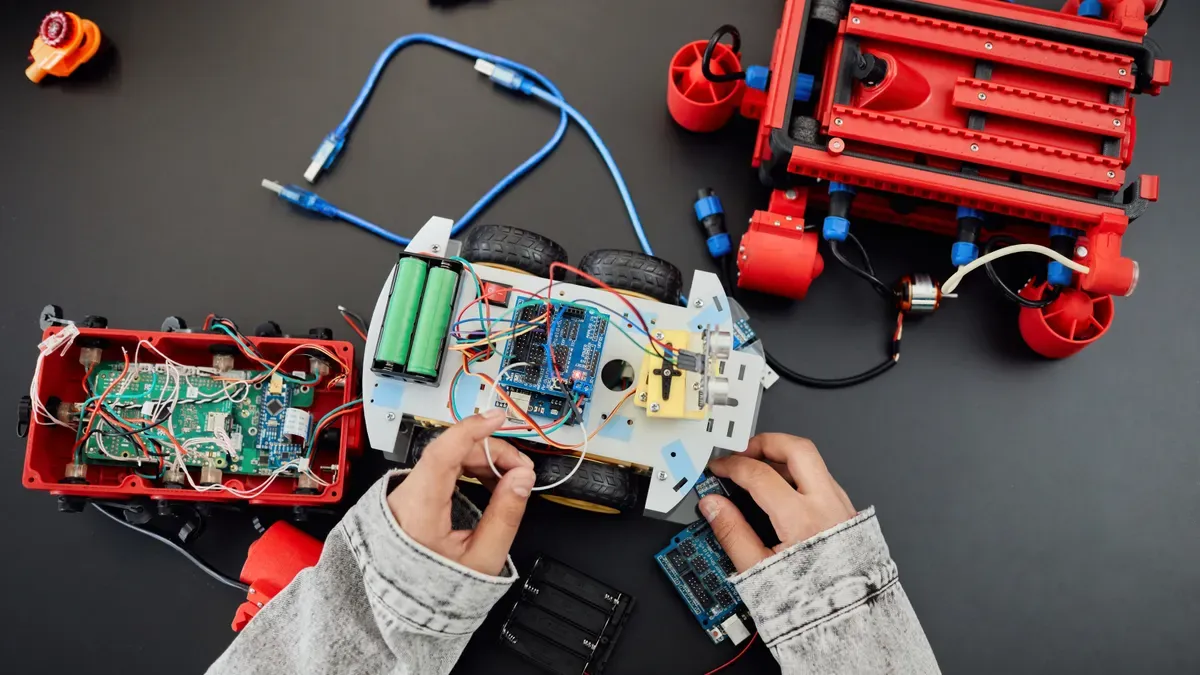
You depend on a robotics wiring harness to maintain safety and reliability in every robotic system. Wire harness assembly organizes and shields electrical networks, safeguarding against hazards that threaten both performance and protection. Poor wiring can cause electrical hazards, fragile connections, and even fires, as shown in the table below:
|
Risk Type |
Description |
|---|---|
|
Electrical Hazards |
Power supply and cords can lead to arc flash, shock, fire, and other electrical injuries. |
|
Improper Assembly/Installation |
Errors in assembly can result in connection issues that may not be detected until testing. |
|
Fragility of Wires |
Small wires are fragile and should be protected from impacts, while larger cables can endure more abuse. |
|
Pinch Points |
Wires should be kept away from areas where they could be pinched by moving mechanisms. |
|
Electromagnetic Interference |
Data/sensor cables should be distanced from motors to minimize interference; ferrite beads can help. |
|
Soldering Issues |
Soldering before crimping can lead to connection loss and potential fire hazards. |
Robotized wire harness assembly increases assembly quality and ensures safety-critical processes meet industrial automation demands. You gain flexibility and durability for robotic assembly with custom wire harness and flexible cables. Robotized wire harness assembly delivers electromagnetic interference protection, continuous flex durability, and seamless integration for robotic applications. Prioritize wire harness assembly, testing and quality assurance, and choose a trusted wire harness manufacturing partner for your automation solutions. For optimal protection and performance, explore the Robotics Wiring Harness that matches your robotic assembly operations and robotized solutions.
A robotics wiring harness organizes and protects wires, ensuring safety and reliability in robotic systems.
Proper insulation and secure routing prevent short circuits and electrical hazards, enhancing the safety of your robotic assembly.
High-quality crimping and vibration resistance in connections ensure stable power and data transmission, reducing downtime.
Shielded cables and proper grounding minimize electromagnetic interference, maintaining signal integrity in robotic applications.
Using protective sleeving and strain relief prevents mechanical damage, extending the lifespan of your wiring harness.
Organized layouts and color coding simplify maintenance and troubleshooting, making repairs quicker and more efficient.
Choosing a trusted supplier with expertise and quality certifications ensures your wiring harness meets safety and performance standards.
Investing in high-quality wire harness assembly leads to long-term savings by reducing repair costs and enhancing operational reliability.
You rely on a robotics wiring harness to keep your robotic systems running safely and efficiently. Electrical reliability forms the backbone of every robotic assembly, ensuring that power and data flow without interruption. When you invest in robust wire harness assembly, you reduce the risk of electrical failures and support stable operation for all your automation solutions.
Short circuits can halt your automation processes and threaten safety. You must address the most common causes of short circuits in robotic systems to maintain assembly quality and protect your investment.
Proper insulation stands as your first line of defense. Specialized insulation shields wires from harsh environments, moisture, and mechanical stress. This insulation prevents failures caused by bending, stretching, or exposure to chemicals. You benefit from fire-resistant and EMI-shielded materials that block electrical noise and reduce the risk of fire. These features ensure your wire harness assembly meets the demands of industrial automation and robotic applications.
Tip: Always choose wire harness assembly with abrasion-resistant cables and high-flex performance design. These features extend the service life of your robotic assembly and minimize maintenance needs.
You must route wires securely to avoid pinch points and chafing. Secure routing keeps wires away from moving parts and sharp edges, reducing the chance of insulation failure. Environmental protection, such as sealed connectors and protective sleeving, prevents moisture intrusion and corrosion. With proper design and quality control, your wire harness assembly addresses manufacturing defects and supports reliable automation solutions.
Common causes of short circuits in robotic systems include:
Insulation failure from harsh conditions
Moisture intrusion creating conductive paths
Mechanical stress from vibration or chafing
Manufacturing defects causing open or intermittent connections
Wire harness assembly tackles these risks through robust design and thorough testing, giving you peace of mind in every robotic assembly operation.
Stable connections are essential for continuous power and data transmission in robotics. You need reliable links that withstand movement, vibration, and environmental stress.
Crimped connections provide secure mechanical and electrical links. You gain reliability in dynamic environments, where robotic arms and joints move constantly. Well-designed crimp connections resist loosening from thermal cycling and vibration. They also withstand humidity and chemical exposure, which often challenge robotic assembly in industrial settings.
Crimped connections offer:
Secure mechanical and electrical contact
Resistance to loosening and degradation over time
Protection against environmental factors
You ensure consistent performance and reduce unplanned downtime by prioritizing high-quality crimping in your wire harness assembly.
Robotic systems experience constant motion and vibration. You must use wire harness assembly designed for high torsional resistance and flexibility. This approach maintains stable energy transmission and reliable data communication, even under dynamic load conditions. Optimized shielding prevents interference, supporting vision and sensor systems in your automation solutions.
|
Benefit |
Description |
|---|---|
|
High torsional resistance |
Ensures multi-axis robot motion stability |
|
Stable energy transmission |
Maintains power under dynamic load conditions |
|
Reliable data communication |
Essential for vision and sensor systems |
|
Long service life |
Supports continuous operation without failure |
|
Reduced unplanned downtime |
Minimizes disruptions due to cable fatigue |
|
Optimized shielding |
Prevents interference in signal transmission |
You can further enhance reliability by integrating specialized products like the High Current Control Power Harness, which supports demanding robotic assembly operations and ensures consistent power delivery.
A well-designed robotics wiring harness uses flexible, abrasion-resistant cables and custom wire harness solutions to accommodate movement and vibration. This design supports the real-time monitoring and control required for advanced robotics and automation. You achieve long service life, reduced maintenance, and optimal safety for your robotic assembly.
|
Feature |
Explanation |
|---|---|
|
Flexible, abrasion-resistant cables |
Endure frequent bending and stretching, reducing wear and tear |
|
Specialized insulation |
Prevents electrical failures from movement and harsh environments |
|
Fire-resistant and EMI-shielded materials |
Prevent failures and noise, ensuring reliable signal transmission |
|
High-flex performance design |
Lasts longer than standard cables, reducing errors and maintenance |
You secure the future of your automation solutions by choosing wire harness manufacturing partners who prioritize quality, durability, and flexibility in every assembly. This commitment to excellence keeps your robotics wire harnesses safe, reliable, and ready for the challenges of industrial automation.
You depend on signal integrity to keep your robotic assembly accurate and responsive. In robotics, even minor interference can disrupt data flow and compromise safety. A robotics wiring harness must deliver clean, reliable signals to support advanced automation and robotic applications. You achieve this through careful wire harness assembly, which uses advanced design strategies to minimize interference and maintain data accuracy.
Signal interference poses a major risk to robotic assembly operations. You need to address electromagnetic interference (EMI) and radio frequency interference (RFI) to protect your automation solutions. Robotized wire harness assembly uses several methods to shield sensitive signals and maintain assembly quality.
Shielded cables form the backbone of interference prevention in robotics wire harnesses. You benefit from advanced shielding technologies that block external noise and prevent signal degradation. These shields wrap around conductors, creating a barrier against EMI and RFI. In edge AI robots, this protection ensures decision-making accuracy and supports real-time automation.
Robotized wire harness assembly incorporates:
Multi-layer shielding for high-frequency protection
Bundling methods that enhance mechanical integrity
Specialized materials that increase durability and flexibility
You maintain safety and reliability by choosing wire harness assembly with robust shielding for all robotic assembly operations.
Proper grounding is essential for dissipating unwanted electrical currents. You reduce the risk of interference by connecting shields and cable armor to a common ground. Robotized wire harness assembly ensures every ground connection meets strict quality standards. This approach prevents voltage spikes and supports stable operation in industrial automation environments.
Tip: Always verify that your wire harness assembly includes dedicated grounding paths for both power and signal lines. This step increases safety and reduces troubleshooting time.
Accurate data transmission is critical for robotics. You rely on wire harness assembly to deliver precise signals between sensors, controllers, and actuators. Robotized wire harness assembly uses custom wiring solutions to enhance accuracy and reduce signal noise.
Organized signal paths help you maintain clear communication in robotic assembly. You benefit from specific routing configurations that separate sensitive data lines from power cables. This organization reduces crosstalk and supports high-speed data transfer. Robotized wire harness assembly uses color coding and labeling to simplify installation and maintenance, improving assembly quality.
Key features of organized signal paths:
Reduced signal noise
Faster fault detection
Improved assembly efficiency
Separating power and data lines is a proven method for managing electromagnetic interference. You achieve better signal integrity by routing these lines apart within the wire harness assembly. Robotized wire harness assembly uses cable separation, shielding, and grounding to ensure reliable performance in all robotic applications.
|
Method |
Benefit |
|---|---|
|
Cable separation |
Minimizes EMI and signal loss |
|
Shielding and grounding |
Enhances safety and data reliability |
|
Custom wiring solutions |
Supports unique robotic assembly needs |
You secure the future of your automation solutions by investing in wire harness manufacturing that prioritizes signal integrity, safety, and durability. Robotized wire harness assembly delivers the flexibility and quality you need for high-performance robotics.
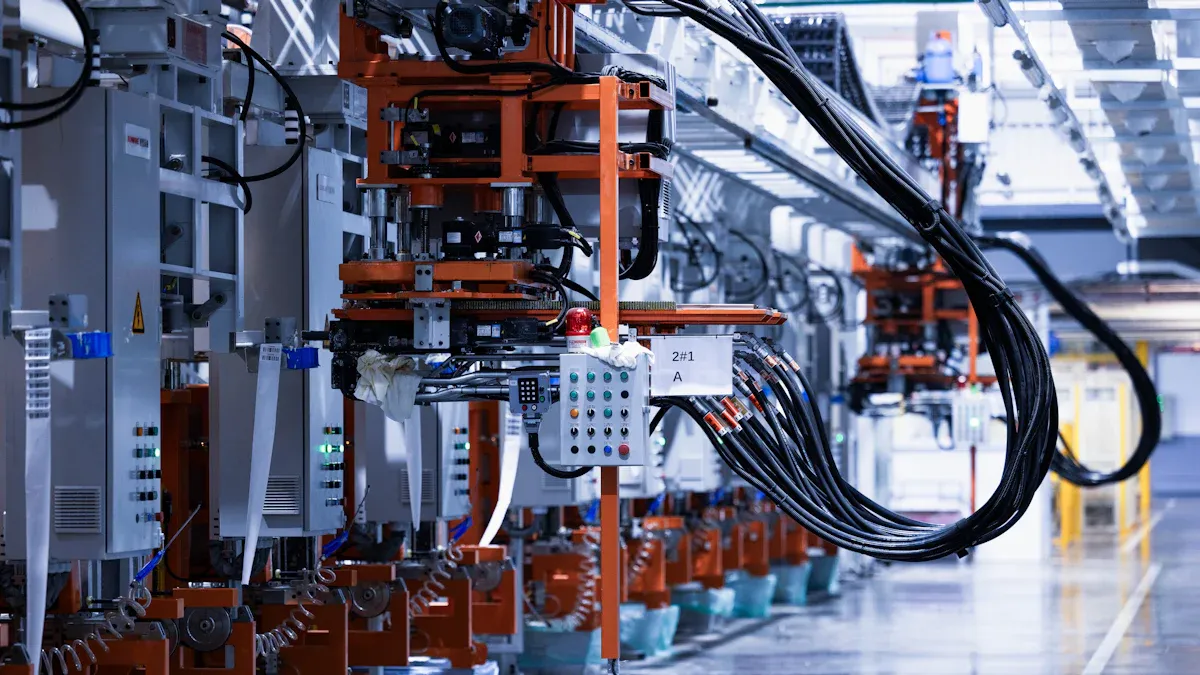
You need robust physical protection in wire harness assembly to keep your robotics wiring harness safe from mechanical and environmental hazards. In robotics, wires face constant movement, vibration, and exposure to harsh conditions. Robotized wire harness assembly shields your cables, ensuring long-term safety and reliable operation for every robotic assembly.
Mechanical hazards can threaten the integrity of your wire harness assembly. You must use the right protective materials and strategies to prevent abrasion, cuts, and impact damage.
Protective sleeving forms the first barrier against physical threats. Robotized wire harness assembly uses a range of materials to match the demands of each application. The table below shows common protection materials and their uses:
|
Protection Material |
Description |
Application Area |
|---|---|---|
|
PVC tape |
Basic abrasion resistance at the lowest cost. |
General use |
|
Woven PET cloth tape |
Handles temperatures up to 150°C; standard for engine bay harnesses. |
Engine bay harnesses |
|
Non-woven fleece tape |
Absorbs vibration and prevents rattle; preferred for automotive cabins. |
Automotive cabin harnesses |
|
Braided nylon sleeving |
Rated to 120°C, cut-through resistant. |
Harsh environments |
|
Split convoluted tubing |
Flexible and easy to install around pre-terminated harnesses. |
General use |
|
Heat-shrink tubing |
Provides a sealed, moisture-proof covering. |
Connector interfaces |
|
Multiple protection layers |
Used in mining and defense harnesses for added durability. |
Mining and defense harnesses |
You select the right sleeving based on your robotic assembly’s environment. For harsh automation solutions, braided nylon sleeving or multiple protection layers offer superior durability.
Strain relief prevents cable damage from pulling, bending, or flexing. Robotized wire harness assembly integrates strain relief boots and flexible sleeves at connection points. This approach reduces the risk of conductor breakage and connector failure. You also benefit from enhanced connector designs that improve structural integrity and mechanical properties.
|
Mechanical Hazard |
Mitigation Strategy |
|---|---|
|
Vibration-induced failures |
Enhanced connector designs to improve structural integrity and mechanical properties. |
|
Thermal cycling |
Advanced sealing systems and moisture barriers to prevent degradation. |
|
Cable flexing |
Mechanical protection systems like strain relief boots and flexible protective sleeves. |
|
Inadequate diagnostics |
Advanced monitoring technologies for early detection of connector degradation. |
You ensure safety and quality by choosing wire harness assembly with advanced strain relief and protective sleeving.
Robotic arms and joints demand flexibility and torsion resistance from every wire harness assembly. Robotized wire harness assembly delivers these features to support dynamic movement and continuous operation.
You need wire harness assembly that withstands continuous twisting, bending, and acceleration forces. Robotized wire harness assembly uses custom cable assemblies designed for high-flexibility and torsion resistance. These harnesses maintain stable power and signal transmission, even in multi-axis robotic assembly.
Custom robot cable assemblies:
Support high-flexibility and torsion resistance
Ensure stable power and signal transmission
Perform reliably in industrial robotics, electronics assembly, and logistics
Manufacturers test these harnesses to withstand over 10 million flex cycles, proving their durability for 24/7 automation.
Robust mounting secures your wire harness assembly and prevents unwanted movement. Robotized wire harness assembly uses strong mounting clips and brackets to keep cables in place during rapid robotic motion. This design reduces friction, vibration, and shock, which can cause premature wear.
Validation tests confirm the effectiveness of these solutions:
|
Validation Test |
Purpose |
|---|---|
|
Torsion cycle testing |
Ensures the harness can withstand twisting forces over time. |
|
Bend cycle testing |
Validates the harness's ability to endure repeated bending. |
|
Drag chain lifecycle testing |
Assesses performance in dynamic routing environments. |
|
Temperature and environmental testing |
Evaluates durability under varying conditions. |
|
Mechanical stress and retention testing |
Confirms the harness maintains integrity under stress. |
As robotics advances, you rely on robotized wire harness assembly to deliver flexibility, safety, and quality. Wire harness manufacturing continues to innovate, ensuring your automation solutions remain reliable in the most demanding environments.
You need efficient maintenance and troubleshooting strategies to keep your robotics wiring harness performing at its best. Robotized wire harness assembly delivers organized layouts and diagnostic features that simplify repairs and reduce downtime. You gain flexibility and safety by choosing wire harness assembly designed for easy access and clear identification.
Organized layouts in wire harness assembly make maintenance straightforward. You quickly identify and access each connection point, reducing errors during robotic assembly and repairs. Accessible designs enable you to perform repairs without damaging other components. Robotized wire harness assembly prioritizes clear labeling and identification, which supports quality and safety in every automation solution.
Color coding stands out as a practical method for wire harness assembly. You use printed labels, color codes, or heat-shrink markers to identify connections easily, especially in complex robotics systems. This approach helps you avoid mistakes during assembly and maintenance. Robotized wire harness assembly incorporates color coding to streamline troubleshooting and ensure safety.
Tip: Always label every wire and connector. This practice speeds up repairs and supports efficient robotic assembly.
Modular sections in wire harness assembly allow you to replace or upgrade parts without disturbing the entire system. You benefit from quick disconnects and modular layouts, which save hours during repairs or upgrades. Robotized wire harness assembly designs harnesses with serviceability in mind, supporting flexibility and quality in robotic solutions.
Modular sections offer:
Easy replacement of damaged parts
Simplified upgrades for automation solutions
Reduced risk of assembly errors
You also keep detailed schematics, pinouts, and test records. These documents help you train staff, troubleshoot issues, and pass audits with confidence.
Fast fault detection is essential for maintaining safety and reliability in robotics. Robotized wire harness assembly integrates advanced strategies that help you identify faults quickly and accurately.
Access points in wire harness assembly provide direct entry for testing and repairs. You locate faults without dismantling the entire robotic assembly. Robotized wire harness assembly includes access points that support efficient maintenance and protect the integrity of your automation solutions.
Diagnostic features enhance your ability to monitor and maintain wire harness assembly. Embedded sensors and data analytics allow you to predict maintenance needs and prevent unexpected failures. Automated inspection systems use sensors to detect faults and performance degradation, reducing human error. Real-time monitoring of cable health parameters lets you schedule proactive maintenance, minimizing downtime in robotic assembly.
|
Strategy |
Description |
|---|---|
|
Automated Testing |
Enables real-time fault detection through continuity and high-voltage testing. |
|
AI-driven Inspection Systems |
Inspects wire terminations for inconsistencies before production, ensuring defect-free harnesses. |
|
3D Vision-based Detection |
Enhances accuracy in wire placement and facilitates quicker error identification in complex structures. |
Robotized wire harness assembly leverages these diagnostic features to deliver quality and safety in every robotics wiring harness. You secure reliable operation and maximize the lifespan of your robotic solutions by investing in wire harness manufacturing that supports advanced maintenance and troubleshooting.
You must ensure that every wire harness assembly in your robotics project meets strict safety and quality standards. Robotized wire harness assembly helps you achieve compliance with global regulations and industry benchmarks, protecting both your robotic assembly and your automation solutions.
You face a range of safety standards when working with wire harness assembly for robotics. These standards guarantee that your robotic assembly operates safely and reliably in any environment. The table below outlines the most important certifications and what they mean for your assembly:
|
Standard/Certification |
Region/Scope |
Description |
|---|---|---|
|
UL (e.g. UL 508A) |
USA |
Ensures electrical safety for machinery wiring, meeting NEC requirements. |
|
CSA (C22.2) |
Canada |
Canadian wiring safety standard, harmonized with UL. |
|
CE Marking |
EU/EEA |
Indicates compliance with EU safety directives, essential for market access. |
|
RoHS Directive |
EU (global impact) |
Restricts hazardous substances in cables, promoting environmental safety. |
|
IPC/WHMA-A-620 |
Global (industry) |
Sets quality standards for cable/harness workmanship. |
|
ISO 9001 (QMS) |
International |
Ensures consistent quality management processes. |
You reduce the risk of wiring failures in robotic assembly by following UL and CSA standards. CE marking opens the door to the European market, while RoHS keeps hazardous substances out of your wire harness assembly. IPC/WHMA-A-620 and ISO 9001 ensure your assembly meets the highest quality expectations.
You must verify that your wire harness assembly carries the right certifications before you deploy any robotics solution. Certification proves that your robotized wire harness assembly has passed rigorous testing and meets all safety requirements. This process includes continuity testing, insulation resistance checks, and high-voltage (hipot) testing. You can trust that your assembly will perform under real-world conditions and support the flexibility your automation solutions demand.
You gain a competitive edge by choosing wire harness manufacturing partners who follow best practices in assembly. Modern factories use automated wire preparation for precision and consistency. They calibrate tooling regularly to prevent variations in assembly integrity. Controlled soldering processes eliminate cold solder joints, and advanced labeling systems—such as color coding, barcodes, or RFID tags—make installation and maintenance efficient. Effective packaging protects your wire harness assembly during shipping and ensures it arrives ready for robotic assembly.
Digital formboards and augmented reality tools speed up the assembly process.
Automated wire processing machines lower costs and improve consistency.
Final inspection and shipment tracking guarantee customer satisfaction.
You rely on strict testing protocols to confirm the safety and durability of every wire harness assembly. Robotized wire harness assembly includes:
100% continuity testing to confirm assembly integrity.
Pull testing to validate mechanical crimp strength.
Visual inspection before shipment.
Hi-pot testing for dielectric strength.
Environmental testing for performance under extreme conditions.
Robotized wire harness assembly follows global standards like IPC/WHMA-A-620, UL, and ISO. These protocols ensure your assembly will withstand the demands of robotics, automation, and advanced solutions.
Tip: Always request documentation of testing and certification from your wire harness assembly supplier. This step protects your investment and ensures long-term reliability for your robotic assembly.
You want your robotic assembly to deliver consistent performance and minimize unexpected expenses. A well-designed wire harness assembly supports both cost savings and long-term reliability for your robotics operations. By focusing on maintenance savings and extended lifespan, you ensure your automation solutions remain efficient and safe.
You reduce repair costs when you use high-quality wire harness assembly in your robotic systems. Organized layouts and robust connections prevent common failures, so you spend less time and money on repairs. Many organizations that implement predictive maintenance systems see maintenance cost reductions of 20-30%. These savings come from fewer breakdowns and less frequent part replacements. You keep your robotics running smoothly and avoid costly interruptions in your automation processes.
Fewer emergency repairs
Less downtime for robotic assembly
Lower labor costs for troubleshooting
You lower the risk of failure by choosing wire harness assembly built for demanding environments. Secure routing, advanced insulation, and reliable connectors all contribute to greater safety. When you invest in quality assembly, you protect your robotics from electrical hazards and mechanical damage. This approach keeps your automation solutions productive and reduces the chance of unexpected shutdowns.
Tip: Schedule regular inspections for your wire harness assembly. Early detection of wear or damage helps you prevent failures before they impact your robotic assembly.
You extend the lifespan of your robotics by selecting wire harness assembly made from durable materials. These assemblies use flexible, corrosion-resistant cables that withstand harsh conditions. Research shows that high-quality wire harnesses play a crucial role in the longevity of robots, especially in challenging environments. Flexible and interference-resistant designs help your robotic assembly operate reliably year after year.
|
Material Type |
Benefit |
|---|---|
|
High-flex cables |
Withstand repeated movement |
|
Corrosion-resistant |
Resist moisture and chemicals |
|
EMI-shielded |
Block signal interference |
You achieve consistent performance when your wire harness assembly maintains stable connections and signal integrity. Reliable assembly ensures your robotic systems deliver precise movements and accurate data transmission. This consistency supports the safety of your robotics and the efficiency of your automation solutions. You avoid costly downtime and maintain high productivity in every robotic assembly.
Stable power delivery for robotics
Reliable data flow for automation
Fewer interruptions in robotic assembly
A focus on quality wire harness assembly gives you peace of mind. You know your robotics will perform safely and efficiently, supporting your automation goals for years to come.
Selecting the right robotics wiring harness shapes the safety, efficiency, and future scalability of your robotic systems. You must evaluate your application needs, consider growth potential, and choose a supplier with proven expertise and advanced factory capabilities.
You should match your wiring harness to the unique requirements of your robotic assembly. Custom harnesses address specialized routing, unique connectors, or specific electrical ratings. Standard harnesses fit common layouts and widely used configurations. The table below helps you compare both options:
|
Factor |
Custom Wiring Harnesses |
Standard Wiring Harnesses |
|---|---|---|
|
Application Requirements |
Necessary for unique routing, specialized connectors, or specific electrical ratings. |
Suitable for common layouts and standard configurations. |
|
Production Volume |
Ideal for low- to mid-volume projects with unique needs. |
Best for high-volume, repeatable manufacturing. |
|
Lead Time and Budget |
Longer lead time but better long-term value for performance. |
Quick availability and predictable pricing. |
|
Compliance and Quality Standards |
Aligns with industry certifications and regulatory requirements. |
May not meet specific compliance needs for specialized industries. |
Tip: If your robot requires specialized movement, sensors, or operates in harsh environments, a custom harness often delivers better safety and reliability.
You must consider how your wiring harness will support future expansion. Custom harnesses adapt to evolving designs and new technologies. Standard harnesses offer quick deployment for large-scale, repeatable projects. When you anticipate rapid growth or frequent upgrades, custom solutions provide flexibility. For stable, high-volume production, standard harnesses keep costs predictable.
You gain long-term value by choosing a supplier with deep expertise in robotics wiring harnesses. Material quality directly impacts the durability and safety of your harness. Experienced suppliers select the right terminal blocks, insulating sheaths, and binding materials for your application. They use flame-retardant additives and reinforcing materials to enhance performance and protect your robotic systems.
High-quality materials extend harness lifespan.
Proper material selection improves safety and functionality.
Expert suppliers understand the demands of industrial robotics.
You should evaluate your supplier’s manufacturing capabilities to ensure they meet your project’s demands. The table below highlights key capabilities:
|
Capability |
Description |
|---|---|
|
Flexibility |
Harnesses must move with robotic arms and flex repeatedly during operation. |
|
Durability |
High-flex wire and proper strain relief reduce fatigue and extend service life. |
|
Electromagnetic interference protection |
Essential for maintaining performance in various environments. |
|
Precision customization |
Tailored solutions to meet specific application needs. |
You benefit from suppliers who offer:
High-flex cable expertise with 10 million+ cycle validation
ISO 9001/IATF 16949 certified manufacturing
Global technical support and fast sample delivery
Competitive pricing and scalable production
Note: Always request documentation of certifications and testing protocols. This step ensures your wiring harness meets industry standards and supports safe, reliable robotic operation.
You protect your robots by choosing advanced wiring harnesses that deliver reliable power and data flow. Custom designs prevent hazards and meet strict safety standards, while durable materials and thorough testing extend service life.
Well-designed harnesses reduce failures and keep your robots running smoothly.
Material selection and validation testing ensure long-term performance.
Partnering with a trusted Wire Harness Processing Factory gives you access to automation expertise and high-quality production, supporting safe and efficient robotics applications.
A robotics wiring harness organizes and protects the wires in your robot. It keeps power and data flowing safely, reduces clutter, and prevents damage from movement or harsh environments.
You gain safety by using a wiring harness that prevents short circuits, shields against interference, and secures connections. This reduces fire risks and electrical failures in your robotic system.
You should inspect your wiring harness every three to six months. Look for signs of wear, loose connections, or damaged insulation. Regular checks help you catch problems early.
Yes, you can order custom wiring harnesses. Custom options let you match unique layouts, connector types, and environmental needs. This ensures your robot operates safely and efficiently.
You should look for UL, CE, and ISO certifications. These prove your wiring harness meets strict safety and quality standards for robotics and automation.
Start by checking color-coded wires and labeled connectors. Use access points for testing. Diagnostic features like embedded sensors or automated testing tools help you find faults quickly.
Email : grace@smartwireconnect.com
Tel : +8613554925749
Whatsapp : +8613554925749
2-3 Floor, No. 45, Minfu Road, Shatou Industrial Zone, Shajing Street, Bao'an District, Shenzhen, Guangdong, China


©2026 Shenzhen Smart Connection Technology Co., Ltd. All Rights Reserved.
 IPv6 network supported